
Intermediate
Kuari Pass and Pangarchulla Peak Trek
- 7 days
- Group Size:
- 15,100 ft/4590 meter
₹+GST
Description:
A trek with a plate full of high Himalayan mountains!!!
Kuari Pass and Pangarchulla Trek is the perfect combination of high-altitude Himalayan trek in Uttarakhand that is thrilling as well as power-packed. When you will reach the top of the Pangarchulla Peak at an altitude of 4590 m/15,100 ft, the 360° view from there is like an amphitheatre of high Garhwal mountains. This Lord Curzons circuit is known to be one of the most fabled trails of the Himalayas.
The Pangarchulla Peak or the Chimney Peak is one of the best non-technical climbing peaks that can be the ideal test for mountain lovers. This renowned trek in Uttarakhand is done throughout the year, but the winter snow has actually stolen the snow and is surely unsurpassable. If you are a brave heart and you love thrills along with the perfect blend of challenges, then this winter trek amidst the snow should be on your Wishlist.
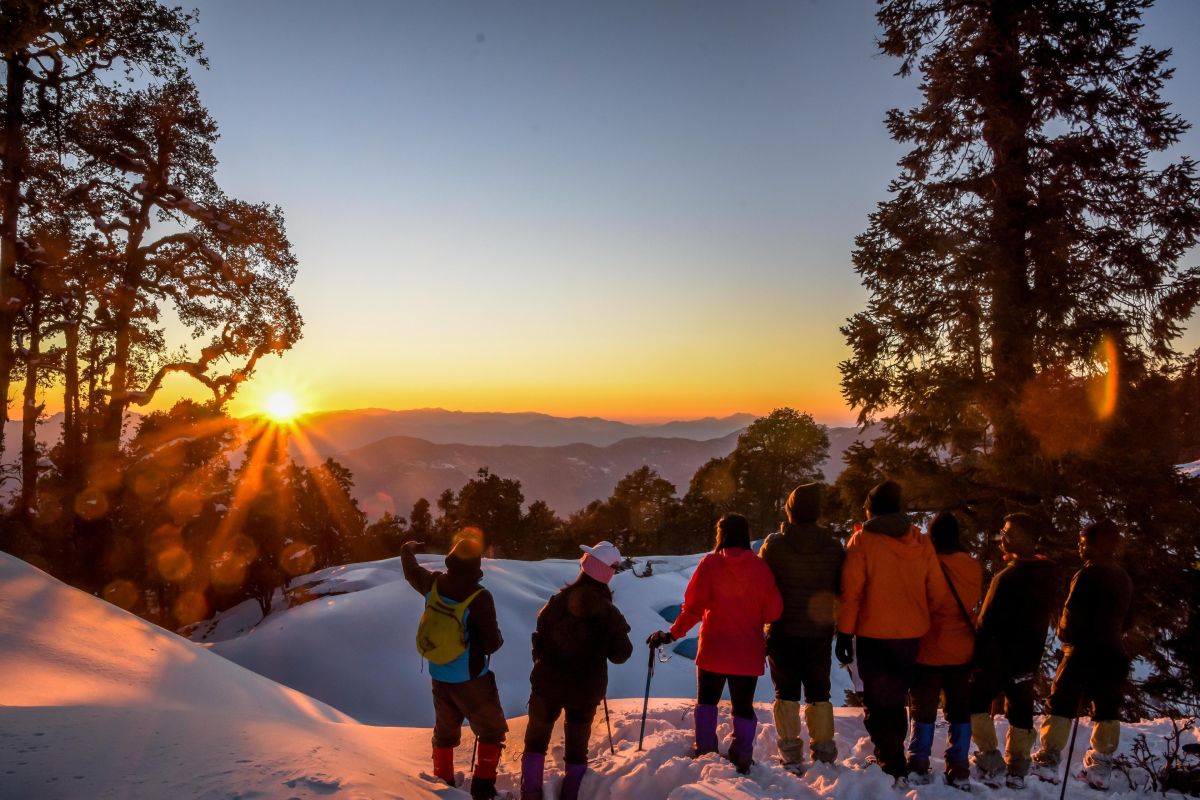
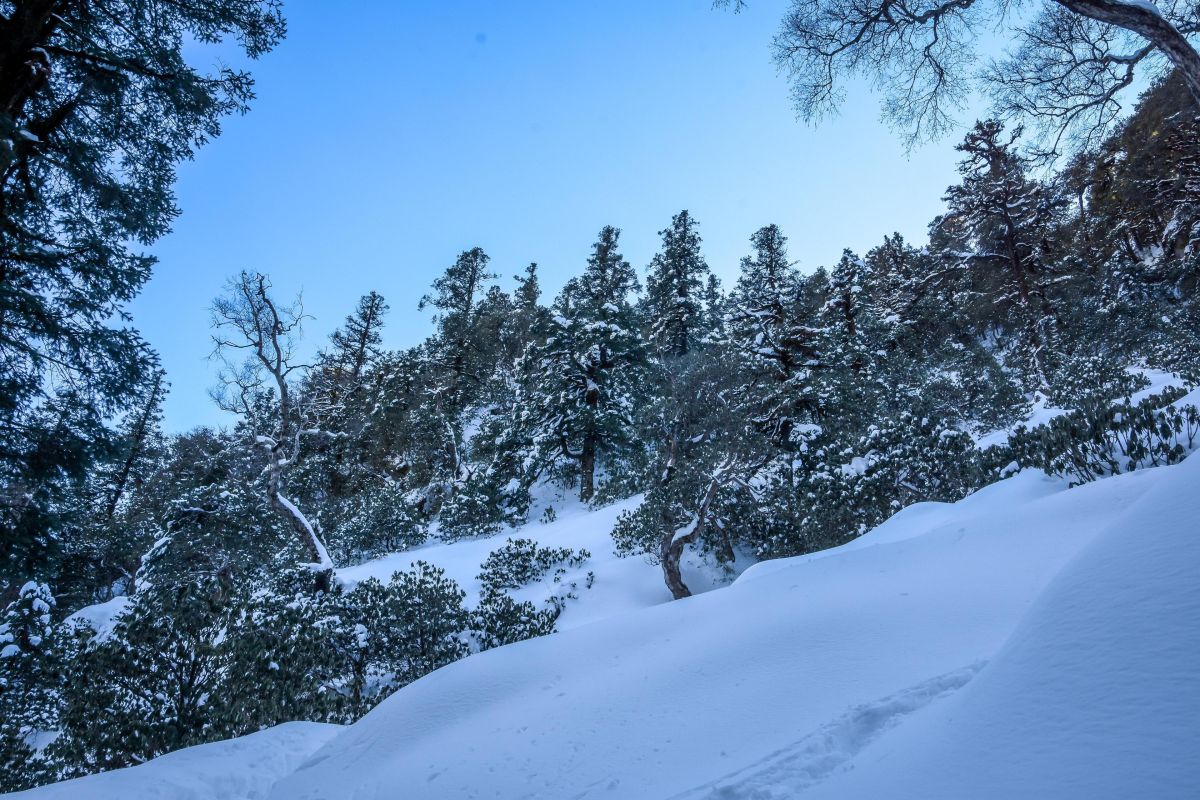
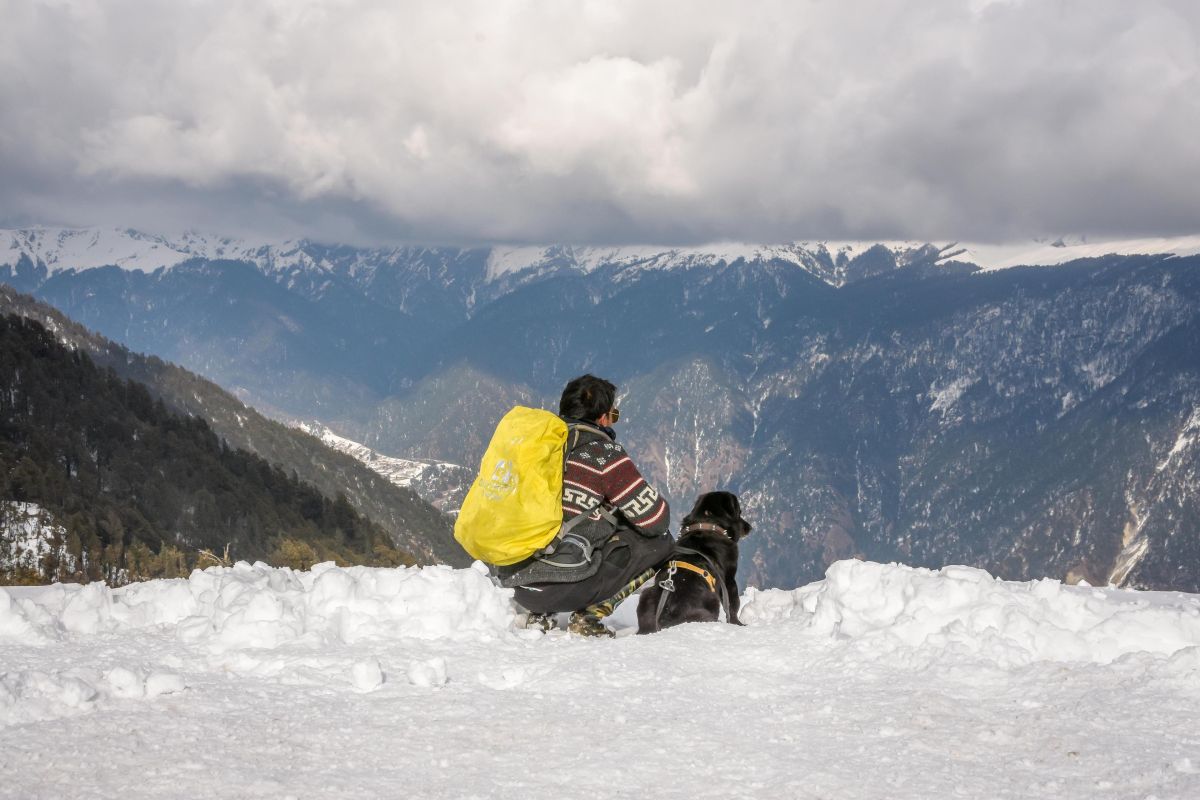
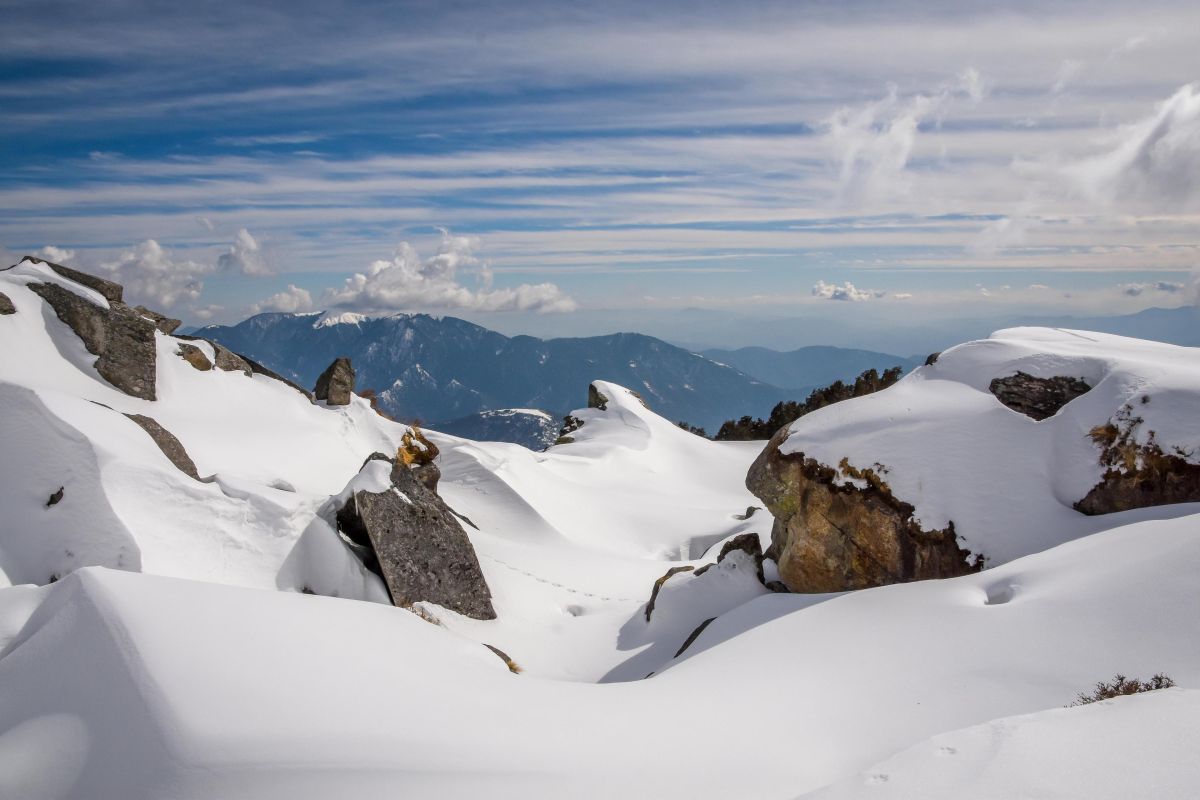
This Himalayan trek in the heart of the Garhwal ranges offers the most breathtaking views of the Garhwal mountains, snowy vistas, and stunning panoramas. If you do this trek in the winter months then the trail allows you to walk through the dense forests of Uttarakhand combined with beds of beautiful and stunning wildflowers and rhododendrons scattered everywhere over the most glistening carpet of snow. This trek will be a treat to your adventure-loving heart but also will take you on a remarkable journey of the captivating world of tranquillity and the best Himalayan scenery. Not only this, but during the winter months when the sky is perfectly clear this trek will leave you awestruck with the astounding views of the renowned Garhwal mountains – Mt Dronagiri, Nanda Devi, Hathi-Ghori Parbat, Chaukhamba, Neelkanth, Kamet, Mana, Barmatia, Mandir, and Lampak I and II. On your route to Pangarchulla, you will also get to see Nandaghunti and Trishul, but the view is not as clear as from Roopkund. The trail to Pangarchulla will actually take you through the portions of the Nanda Devi Sanctuary.
This trek is not only beautiful but also has a rich history connected to it. The trail of Kuari Pass and Pangarchulla Peak is also known as Lord Curzons trail because in the year 1905, Lord Curzon was the first person who trekked from Ghat to Kuari Pass, and thus the name was given in honour of him. This trail covers a portion of the famous Nanda Devi Sanctuary which is actually a glacial basin is considered to be very sacred and also called the ‘Inner Sanctuary’. Eric Shipton and Bill Tilman also accompanied him in this journey. The path they took to reach the pass was from Ghat via Ramni and crossed the Vinayak pass and the rivers – Dhauliganga, Pindar, Kaliganga, Bheriganga, and Mandakini.
Not only rich history but Kuari Pass and the Pangarchulla Peak are also associated with mythological stories as well. As per the folklore tales, Goddess Parvati used to meditate in this place before she was married to Lord Shiva. Lord Shiva used to reside in Mt Neelkanth, which is located right in front of the pass. Lord Shiva was completely moved by her dedication to meditation and hence decided to marry her. Since Goddess Parvati was not married at that time hence the name given was Kuari, which means a bachelor. So in the present day also, while you trek to Kuari Pass, you will find a temple still exists there. There is also the saying that the Nanda Devi peak was named after Goddess Parvati whose other name was Nanda. It is believed that there was a necklace with precious stones adorning the peak. Even the plant Sanjeevani Booti a plant famous for infusing life as mentioned in Ramayana was hidden in a high mountain near the Kuari Pass. And there have been many medical expeditions conducted in the mountains to search for this medicinal herb.
Even the name Pangarchulla also has an interesting combination. The look of the peak is almost like a dark, large chimney that has a cluster of maple trees at its base. Hence the name ‘Pangarchulla’ is given where ‘Pangar’ means maple trees and ‘Chulla’ means chimney. So isn’t that interesting? Additionally, Pangarchulla Peak is also linked with the sacred Brahma Kamal whose scientific name is Saussurea obvallata. This rare flower blossoms only in the high altitude meadows of the Himalayas especially above 14,000 ft and the local people always walk barefoot in the region where the flower grows as they consider it to be very sacred and is offered to the temples.
This beautiful Himalayan trek also offers you a glimpse of the simple life of the surrounding mountain villages of Garhwal. You get to meet and interact with the local people over there. So let us delve into details to experience this magical land in the Himalayas.
Pick-Up and Drop Time
For the Valley of Flowers trek, on Day 1 our team will pick you up from Haridwar at 9am and from there we will drive to Joshimath and reach by evening. On the last day, after breakfast, we will leave for Haridwar and should tentatively reach by 6pm. So for your return journey, you can accordingly make your plan from there onwards.
Best Time to Visit
October, November, December – rocky terrain and bits of hard snow
March and April – snow and ice
If you want to do Kuari Pass and Pangarchulla Peak as a snow trek, then the ideal months to do is March and April when the snow is appropriate and safe enough for the summit. In the daytime, the temperature is between 12 °C and 15 °C and at night it falls down considerably between 0 °C and -5 °C. So make sure you have the right amount of winter wear for two different ranges of temperature and the best way to beat the freezing cold is by layering. And during this time, you will also be able to see fresh blooms of flowers including rhododendrons.
You can also do this trek during the autumn months of October, November, and December. During this time the terrain will be rocky and uneven with bits of hard snow here and there.
Suitable Age Group: This trek can be done by people of the age group 13 to 60 years. The only requirement is that you should be fit enough to walk a total of 43 km and be able to withstand freezing temperatures. Those who are below 18 years, they need to do this trek with their parents or guardians, and those who are above 50 years, it is advised to bring a medically fit certificate from a doctor.
Mobile Network Availability
Mobile networks are available only till Joshimath. From Joshimath, as we start our trek, the signal begins to weaken and you will get a patchy network till Guling which is not at all reliable. However, there won’t be any mobile network. So it is always better to inform your family at Joshimath only.
How to Reach
By Air
The Jolly Grant Airport in Dehradun is a domestic airport and has flights coming from all the major cities. From Dehradun, you can easily reach Haridwar from where our team will pick you up.
By Train
The nearest railway station is Haridwar junction. From Kolkata, you can board Upasana Express or Kumbho Express that leaves from Howrah. Or one can also reach Delhi and then take any train to Haridwar. Haridwar is well connected by train to all the major cities in India.
By Road
Haridwar is well connected by road networks from Delhi and other nearby cities. Hence you can take a cab from Delhi or any other nearby cities and reach Haridwar easily. You should reach Haridwar a day before our journey starts. In the evening do not forget to watch the Ganga Arati from Har Ki Pauri Ghat.
Included
-
Accommodation while trekking will be at cozy homestays.
-
Accommodation at Joshimath.
-
All transportation from Haridwar to Haridwar.
-
All meals while on trek (veg & non veg). From dinner at Joshimath to Breakfast while checking out from Joshimath.
-
Trek equipment like sleeping bags (those who don't have their own), mattresses.
-
Trekking permits and entry fees.
-
First aid medical kits.
-
Qualified & experienced trek leader.
-
One local guide.
-
Completion certificate.
Exclude
-
Porter/mule to carry personal luggage.
-
Hotel, food in Haridwar.
-
Foods on the way, while in the car.
-
Insurance for clients.
-
Anything not specifically mentioned under the head.
Highlights of The Trek
The highlights of the Kuari Pass and Pangarchulla Peak trek are as follows:
What To Pack
- Trekking pole
- Water bottle
- Head lamp
- Sunglasses
- Power bank
- Rain cover for rucksack
- Gaiters
- Windproof jacket
- Raincoat
- Waterproof trekking shoes
- *Micro Spikes (Provided by us)
Tour Plan :
Day 1
Drive to Joshimath
On the first day of the journey, after breakfast, we will begin our drive from Haridwar (314 m) to Joshimath (1890 m) at 9 am. Joshimath is also the base camp for the Valley of Flowers trek, Hemkund Sahib, and Badrinath temple. The drive to Joshimath is very beautiful with the views of breathtaking mountains, the river Ganga, and lush green valleys. The distance covered is 275 km and it will take around 10 hours to reach Joshimath. On the way, we will cross Devprayag, Rudraprayag, and Karnprayag. The Alaknanda River will be our constant companion throughout the journey. Once you reach closer to Joshimath, you will see the high mountains of the Garwal region. Night stay at Joshimath in a hotel or a homestay.
Day 2
Trek to Guling top
On the 2 nd day, we will start our trek finally. Today will be a short and easy trek day. At first, after breakfast, we will drive from Joshimath (1890 m) to Tugashi (2300 m), and from there we will trek to Guling Top (2857 m). The distance from Joshimath to Tugashi is 10 km which will take 30 min drive to reach and from Tugashi to Guling distance is 3 km which will take around 2 hours. This short 30 minute drive is very beautiful with an excellent view of the might Nanda Devi peak. Our trek will start from Tugashi village and the trail is quite easy. With a gradual ascent we will reach Guling Top. Our campsite today is worth a stroll as it will provide unobstructed views of Mt Dronagiri, Hathi-Ghori Parbat, and others. Overnight stay at Guling.
Day 3
Trek to Khulara top
On our 3 rd day, after breakfast, we will start our trek from Guling (2857 m) to Khulara Top (3390 m). The total distance travelled will be 5 km and will take around 4 hours to reach Khulara. Today we walk through a dense forest of pine trees, oak trees, and Himalayan birch trees. Here you will also see bright red rhododendrons blooming all through the trail and the land is completely covered with snow if you are going on March and April. Today also it is a gradual ascent with birdwatching and finally, we reach the Khulara Top. Our campsite today also is worth staying as it offers magnificent views of Himalayan mountain peaks - Dronagiri, Kamet, Kedarnath Peak, Kedar Dome, Chaukhambha, Mana I, Nanda Devi, Nanda Ghunti, and others. We will reach the campsite by lunchtime hence enjoy your hot lunch with the most spectacular views of the mighty mountains. That’s what I call a perfect lunch with altitude. Overnight stay at Khulara.
Day 4
Summit day. Trek to Pangarchulla and back to Khulara
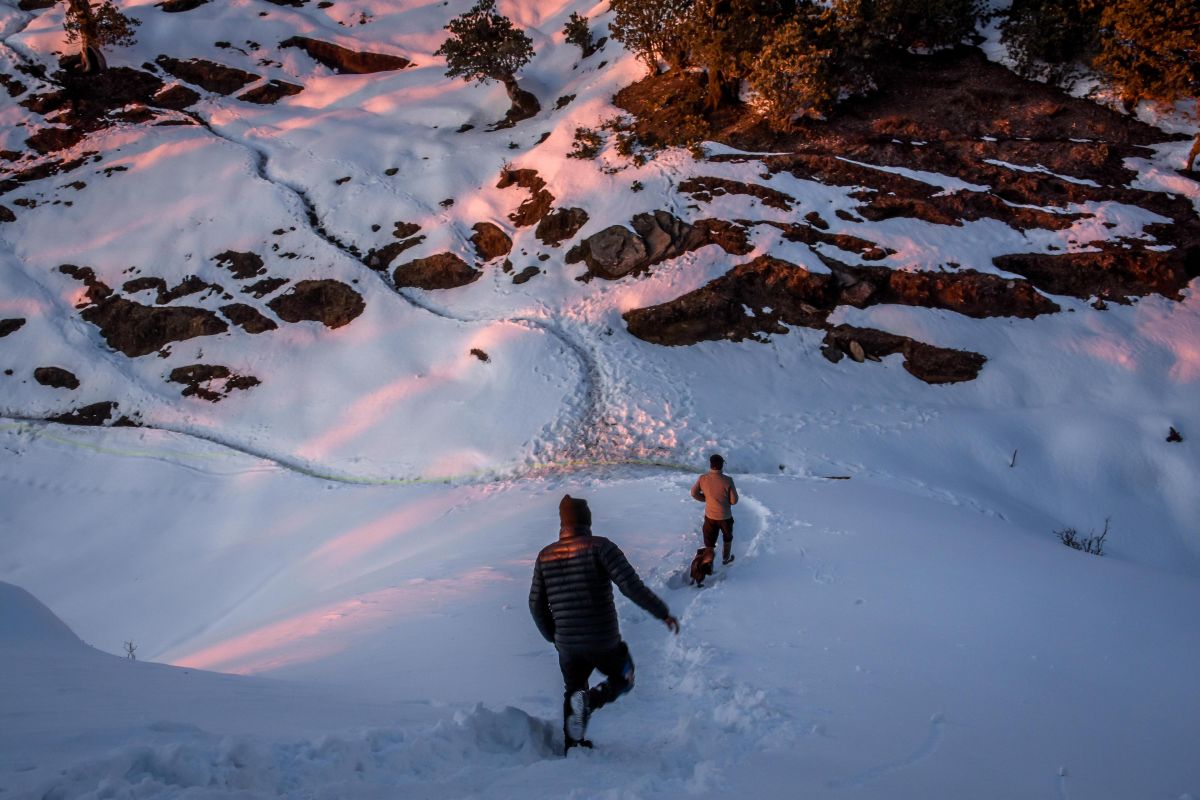
Day 4 marks our summit trek to Pangarchulla Peak (4590 m) from Khulara (3390 m) and back, covering 14 km in 12 hours. Starting at 3 AM, this will be the toughest day, with steep climbs through deep snow. Carry a headlamp and prepare for a challenging ascent. The trail transitions from serene forests to snow-covered meadows under starry skies, creating an indescribable thrill. Witness a stunning sunrise at 6 AM as the first light touches the Himalayan peaks. The final 3-hour push to the summit is the hardest, but the panoramic views of Garhwal’s majestic mountains—Chaukhamba, Kedarnath, Mana, Kamet, and more—make it worthwhile. Savor the tranquility and beauty at the summit before retracing your steps to Khulara, where tea and snacks await in the late afternoon.
Day 5
Trek to Kuari pass and then back to Tali forest
On the 5th day of our trek, we journey from Khulara (3390 m) to Kuari Pass (3800 m) and onward to Tali Forest (3400 m) via Chitrakatha, covering 7.5 km in about 7 hours. After breakfast, we begin trekking through snow-laden trails amidst rhododendron and oak forests, reaching the iconic Lord Curzon’s trail within an hour. Thirty minutes later, we arrive at Gelgad meadows, offering stunning views of Chaukhamba, Neelkanth, and other peaks. The final steep ascent to Kuari Pass rewards us with panoramic vistas of peaks like Kamet, Mana, Trishul, and Dronagiri, with Pangarchulla Peak visible to the left. After lunch at the pass, we descend through Jhandi Top and Chitrakatha meadows to reach Tali Forest, our serene campsite for the night.
Day 6
Trek to Auli via Gorson Bugyal, then drive to Joshimath
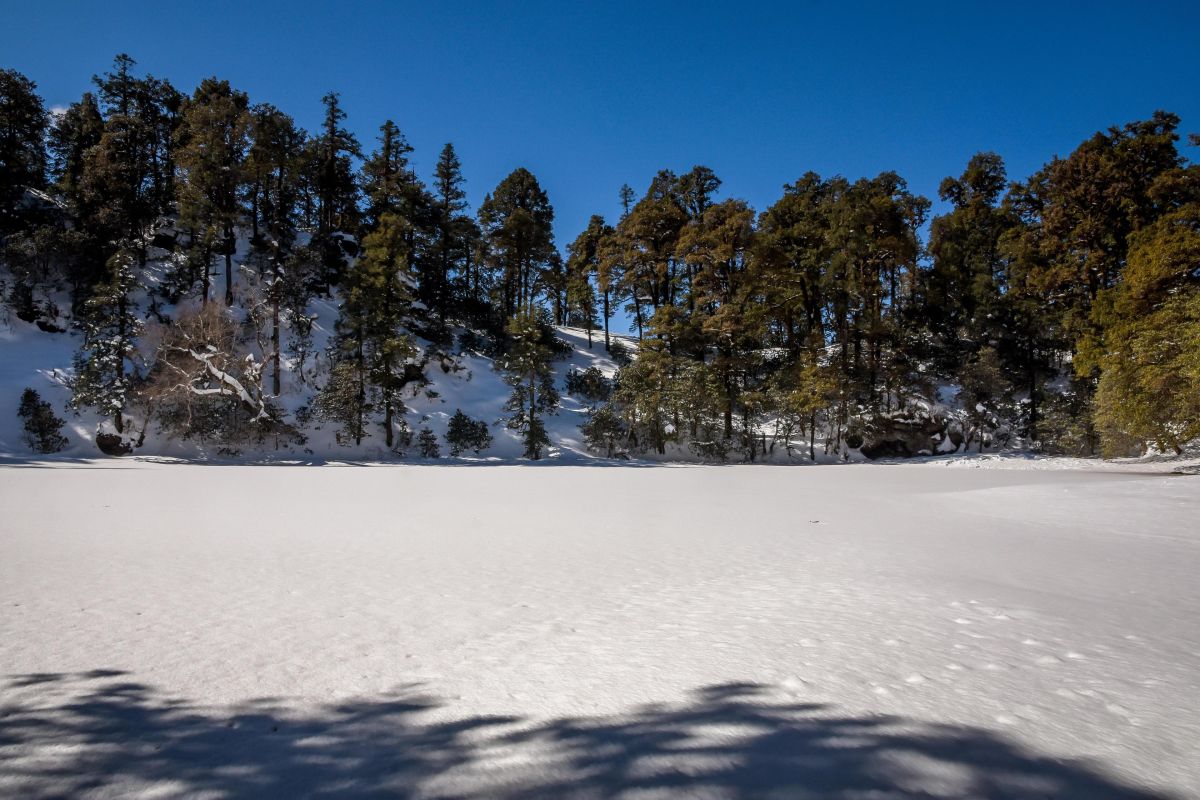
On our 6 th day, we will trek from Tali Forest (3400 m) to Auli (2909 m) via Gorson Bugyal (3519 m) and then we will drive to Joshimath. After breakfast, we will start climbing towards Tali Lake. From here onwards you will get the best views of Nanda Devi mountain. After a steep climb from the lake you will reach a spot from where you can see Tugasi village below. This is the only place where you will get the glimpse of the Himalayan Griffon Vulture. After this, you will reach Gorson Bugyal that is covered in a white carpet of snow. With Nanda Devi all by your side, you descend towards Auli which is also a famous ski spot during March and April. From Auli, we will drive to Joshimath which is 9.5 km in distance and will take 30 minutes to reach.
Day 7
Drive to Haridwar
Today we will drive back to Haridwar with a pot full of delightful memories. We start our journey after breakfast and have our lunch on the way. Hopefully, by 6 pm, we will reach Haridwar. So you can make your further plans from there onwards.
Guest Speak
My Kuari Pass & Pangarchulla trek in 2024 was truly an unforgettable experience! Right from the start, the trek leader and local guide stood out with their expertise, warmth, and constant support, ensuring our safety and making the journey even more enjoyable. The 360-degree panoramic view from Kuari Pass was absolutely breathtaking and easily the highlight of the trek. Unfortunately, due to unfavorable weather conditions, we couldn’t attempt the Pangarchulla Peak, but that did not take away from the magic of this adventure. Every campsite was well-planned, offering comfort amidst the wilderness, and the food was nothing short of delicious, keeping us energized throughout. What made this trek even more special was the deep connection to the local culture and environment that our guides shared with us, adding a unique and enriching layer to the entire experience. Despite the challenges, this trek has carved a permanent place in my heart, and I would love to return for another adventure in the Himalayas!- Tufan Mete
Customer Review
overall Ratings
Out of 5
Overall
Rating
5.0
Client’s Review
0 Reviews
(0 out of 5)
Recent News