

Vastu Yantras Meaning Benefits Types And Correct Placement Guide
06
March
Vastu Yantras: Meaning, Benefits, Types, and Correct Placement Guide
Vastu Shastra is an ancient Indian science that focuses on harmonizing living and working spaces with natural energies. According to Vastu principles, the layout and arrangement of a building influence the flow of energy, which can affect health, prosperity, relationships, and overall well-being.
However, modern homes, apartments, and offices often have layouts that do not perfectly follow Vastu guidelines. In such cases, Vastu Yantras are used as spiritual and symbolic tools to balance energy and reduce negative influences.
Vastu Yantras are sacred geometric diagrams that represent cosmic energies. These yantras are believed to attract positive vibrations, correct Vastu defects, and promote harmony in homes and workplaces.
In this article, we will explore the meaning of Vastu Yantras, their benefits, different types, and the correct methods of placement.
What Are Vastu Yantras?
A Yantra is a sacred geometric design used in spiritual traditions for meditation, protection, and energy balancing. The word “Yantra” comes from Sanskrit and generally refers to a tool or instrument that controls or channels energy.
In Vastu Shastra, yantras are used to correct directional imbalances and improve the flow of positive energy in a space.
A typical Vastu yantra consists of geometric shapes such as:
- triangles
- squares
- circles
- lotus patterns
- sacred symbols.
These shapes are arranged in a specific pattern that represents cosmic forces and universal energies.
Importance of Vastu Yantras
Yantras are considered powerful tools because they combine geometry, symbolism, and spiritual meaning.
According to traditional beliefs, Vastu yantras can help:
- balance energy in a building
- reduce negative influences
- improve harmony and peace
- support prosperity and success
- enhance spiritual energy.
Yantras are often installed in homes, offices, shops, and temples.
Benefits of Vastu Yantras
Many people use Vastu yantras as remedies for common Vastu defects.
1. Energy Balance
Yantras are believed to help balance energy in areas where the building design does not follow Vastu principles.
2. Removal of Negative Energy
They are used to neutralize negative vibrations caused by improper room placement or structural imbalance.
3. Financial Stability
Certain yantras are associated with prosperity and wealth, helping attract positive financial energy.
4. Mental Peace
Yantras placed in prayer or meditation areas may help create a calm and peaceful environment.
5. Spiritual Growth
Some yantras are used to enhance meditation and spiritual focus.
Common Types of Vastu Yantras
There are several yantras used in Vastu remedies. Each yantra is associated with specific energies and purposes.
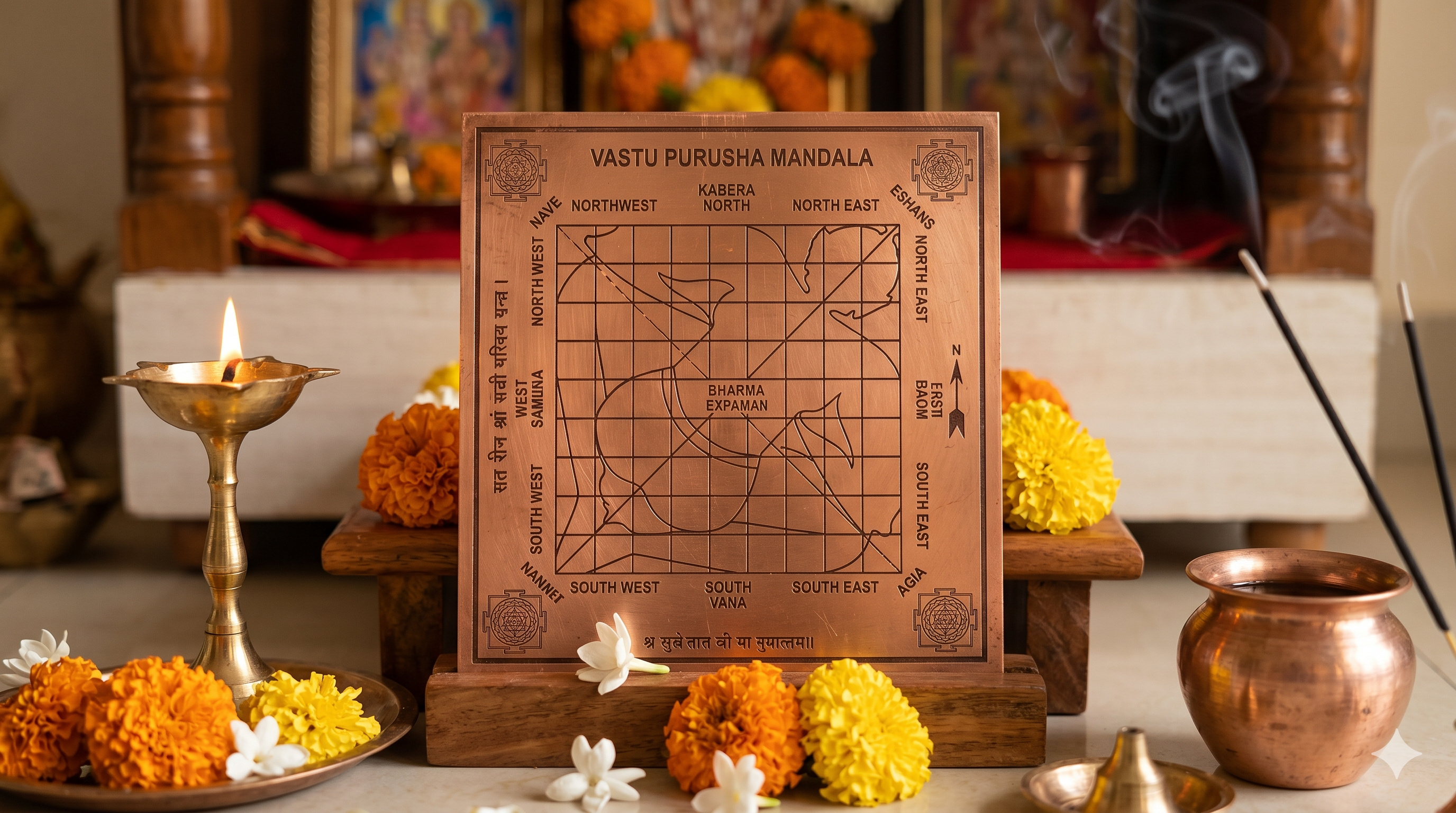
1. Vastu Purusha Yantra
The Vastu Purusha Yantra is one of the most important yantras used in Vastu Shastra.
Meaning
It represents the Vastu Purusha, the symbolic energy that governs the structure of a building.
Benefits
This yantra is believed to:
- correct major Vastu defects
- balance directional energies
- promote harmony within the building.
Placement
It is usually placed:
- in the center of the house
- near the entrance
- under the floor during construction.
2. Shree Yantra
The Shree Yantra is one of the most powerful and sacred yantras in Indian tradition.
Meaning
It represents abundance, prosperity, and cosmic energy.
Benefits
The Shree Yantra is believed to attract:
- wealth
- success
- positive opportunities.
Placement
Best locations include:
- prayer rooms
- living rooms
- offices.
3. Kubera Yantra
Kubera is considered the god of wealth in Hindu tradition.
Benefits
The Kubera Yantra is believed to help with:
- financial growth
- wealth accumulation
- business prosperity.
Placement
Ideal placement:
- North direction
- cash counter or office desk.
4. Navagraha Yantra
The Navagraha Yantra represents the nine planetary energies in astrology.
Benefits
This yantra is used to balance planetary influences that may affect life and work.
Placement
It is usually placed:
- in prayer areas
- meditation rooms.
5. Maha Mrityunjaya Yantra
This yantra is associated with Lord Shiva and is believed to offer protection.
Benefits
It is often used for:
- health and well-being
- protection from negative energies
- spiritual strength.
Placement
Best placed in:
- prayer rooms
- meditation areas.
Materials Used for Vastu Yantras
Yantras are typically made using materials believed to conduct spiritual energy.
Common materials include:
- Copper
- Brass
- Silver
- Gold-plated metal
- Crystal
Copper is the most commonly used material because it is believed to conduct energy effectively.
Where to Place Vastu Yantras
Correct placement is important for maximizing the benefits of yantras.
Entrance Area
Yantras placed near the entrance are believed to protect the home or office from negative influences.
Common yantras used here:
- Vastu Purusha Yantra
- Shree Yantra.
Prayer Room
Prayer rooms are ideal places for sacred yantras.
Yantras commonly placed here include:
- Shree Yantra
- Maha Mrityunjaya Yantra
- Navagraha Yantra.
Office or Workplace
Yantras can also be used in business environments.
For example:
- Kubera Yantra near the cash counter
- Shree Yantra on office desks.
Living Room
Yantras placed in the living room are believed to promote harmony and positive interactions.
They should be placed in clean and visible locations.
Tips for Installing Vastu Yantras
When installing yantras, it is important to follow certain guidelines.
Tips include:
- Place yantras in clean and respectful locations.
- Avoid placing them on the floor directly.
- Keep the area around the yantra clutter-free.
- Install them with positive intention.
Some traditions also recommend energizing yantras through prayers or rituals.
Vastu Yantras vs Other Vastu Remedies
Yantras are just one type of Vastu remedy.
Other common remedies include:
- Vastu pyramids
- crystals
- mirrors
- plants
- salt remedies.
These remedies are often used together to create a balanced environment.
Common Misconceptions About Vastu Yantras
Yantras Can Fix All Problems
Yantras are supportive tools and should not replace practical solutions.
More Yantras Are Always Better
Using too many yantras may create confusion rather than balance.
Yantras Work Without Proper Placement
Correct placement and intention are important for using yantras effectively.
Vastu Yantras for Homes and Offices
Vastu yantras are widely used in both residential and commercial spaces.
In Homes
They are used to promote:
- peace and harmony
- financial stability
- positive energy.
In Offices
They may help create a supportive environment for:
- productivity
- business growth
- leadership.
Conclusion
Vastu yantras are sacred geometric symbols used in Vastu Shastra to balance energy and reduce negative influences in homes and workplaces. These yantras represent cosmic forces and are believed to attract positive vibrations when placed correctly.
Popular yantras such as the Vastu Purusha Yantra, Shree Yantra, Kubera Yantra, and Navagraha Yantra are commonly used to address different aspects of life, including prosperity, protection, and harmony.
While yantras should not replace proper architectural planning or practical decision-making, they can serve as meaningful symbolic tools for improving the energy environment of a space.
When used thoughtfully along with other Vastu practices—such as maintaining cleanliness, proper lighting, and balanced layouts—Vastu yantras can contribute to creating spaces that feel peaceful, organized, and supportive for everyday life.